


When importing an aluminum pergola from China, many buyers focus primarily on the factory price. However, the product cost is only one part of the total investment. Expenses such as ocean freight, customs duties, import taxes, customs clearance, and inland transportation can all have a significant impact on the final landed cost.
Understanding these costs before placing an order helps you create a more accurate budget, avoid unexpected expenses, and choose the most suitable shipping method for your project or business. Whether you are a distributor, contractor, builder, or homeowner purchasing a custom pergola, knowing the complete cost structure allows you to make informed purchasing decisions.
This guide breaks down every major expense involved in importing an aluminum pergola from China, explains the factors that influence shipping and import costs, and shares practical tips to help you optimize your budget and simplify the importing process.
What Makes Up the Total Import Cost?
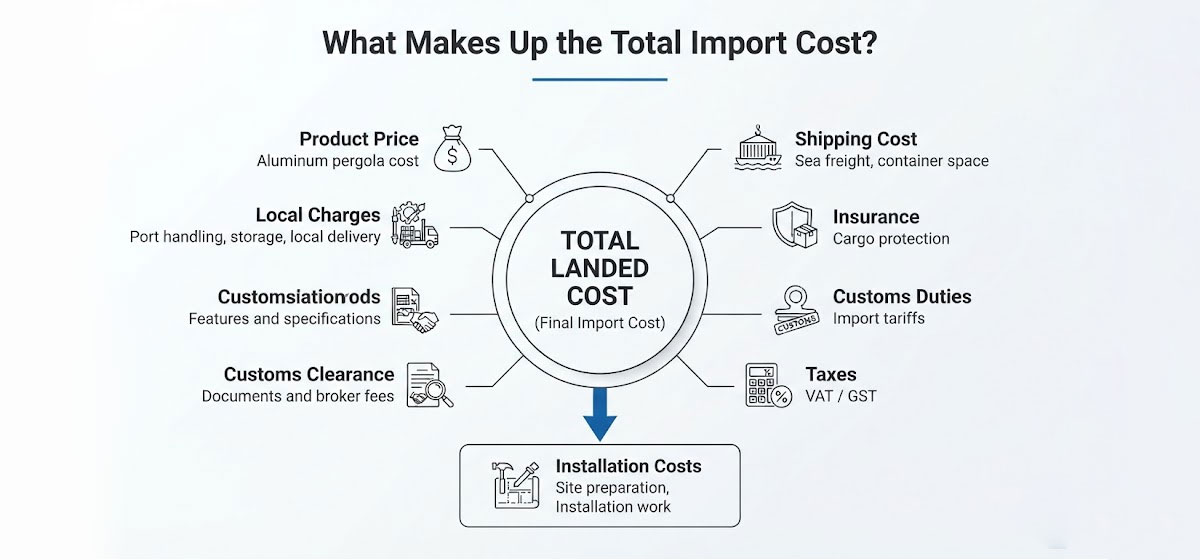
When importing an aluminum pergola, the product quotation is only the starting point of the total investment. The actual amount you pay to receive the pergola at your project location includes several additional cost components throughout the supply chain.
To better understand the complete cost structure, buyers can use the following formula:
Total Landed Cost = Product Price+Shipping Cost+Insurance+Customs Duties+Taxes+Customs Clearance+Inland Transportation+Optional Installation Costs
Each component represents a different stage of the import process. Some costs are related to manufacturing, while others occur during international transportation, customs procedures, or final delivery.
For example, the product price covers the pergola itself and selected configurations, while shipping costs depend on factors such as destination, shipment volume, and transportation method. Import duties, taxes, and clearance fees vary based on the regulations of the destination country.
By understanding the full cost structure before placing an order, you can estimate their real investment more accurately and avoid unexpected expenses during the import process.
Product Cost: What Determines the Price of an Aluminum Pergola?
Product cost is usually the most visible part of an aluminum pergola quotation. However, the price of a pergola is not determined by size alone. Different material choices, structural designs, functional configurations, and customization requirements can all affect the final cost.
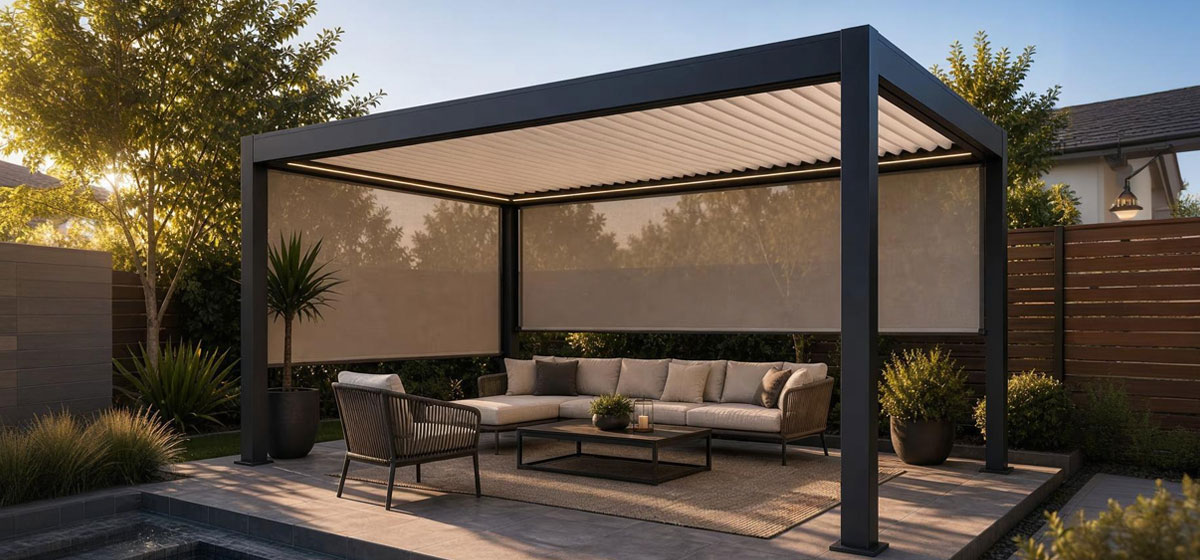
Pergola Size and Structural Design
The size of a pergola directly affects the amount of aluminum, components, and manufacturing work required. In general, larger structures require more materials and more careful structural design to ensure stability, safety, and long-term durability.
Compared with standard-size pergolas, customized dimensions usually involve additional costs. You may think that changing the size or making small adjustments to a standard design is a simple modification. However, for manufacturers, customized products often require additional structural confirmation, drawing adjustments, production planning, and manufacturing process optimization.
In addition, customized production usually cannot follow the same standardized process as mass production. This may result in more material waste and leftover materials during processing, which increases the overall manufacturing cost.
Material Quality and Surface Treatment
The quality of materials used in a pergola directly affects its performance, appearance, and long-term service life.
Key factors include:
l Aluminum profile thickness
l Aluminum alloy grade
l Powder coating quality
l Hardware materials
l Corrosion resistance requirements
Since aluminum pergolas are installed outdoors and exposed to sunlight, rain, and different weather conditions, material selection not only affects product lifespan but also influences future maintenance costs.
Functional Features and Customization Options
Modern aluminum pergolas can be equipped with various features to improve comfort and user experience, such as:
l LED lighting
l Zip Screen outdoor shades
l Glass sliding doors
l Rain sensors
l Heaters
l Fans
Each additional feature requires extra components, design adjustments, and manufacturing processes, which will increase the final product cost.
When comparing different pergola quotations, you should consider the product specifications, material quality, functional features, and manufacturing process instead of focusing only on the lowest price shown on the quotation.
Shipping Cost: What Factors Affect the Shipping Cost of an Aluminum Pergola?
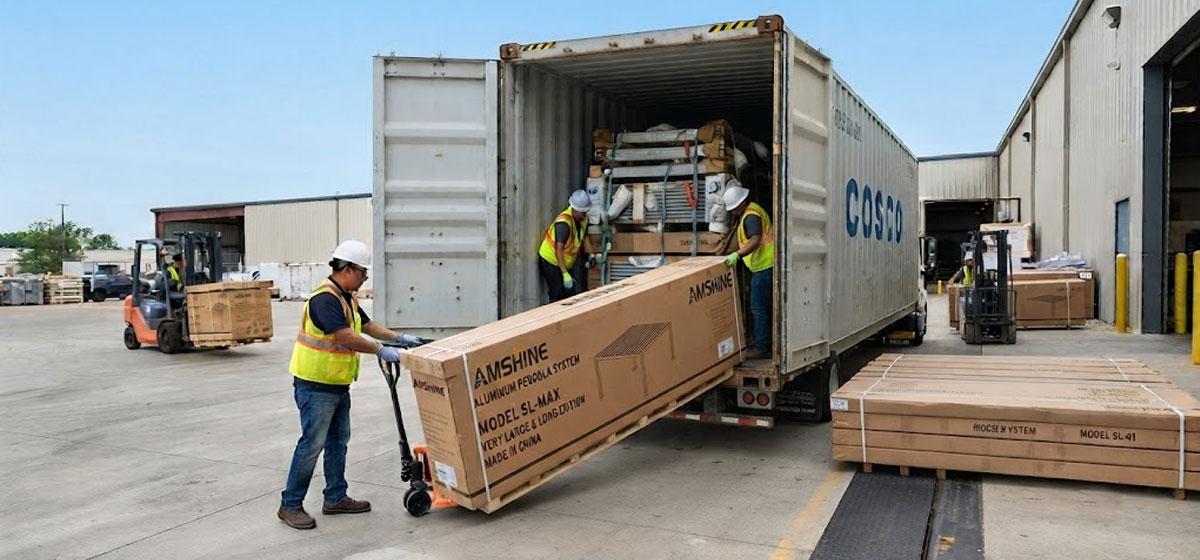
When you purchase an aluminum pergola from overseas, shipping cost is an important part of the total import cost. Unlike small products where freight is mainly calculated based on weight, pergolas are large-volume products, which means the space they occupy during transportation often has a greater impact on shipping costs.
When calculating the shipping cost of an aluminum pergola, you need to consider several key factors, including product volume, container loading quantity, shipping destination, transportation method, and current international freight conditions.
Product Volume and Container Loading
The size of the pergola and the packaging method directly affect how many units can be loaded into a container.
Because aluminum pergolas usually include long aluminum profiles, roof structures, and various accessories, proper packaging design and container loading planning are important to maximize space utilization and reduce the average shipping cost per unit.
Shipping Destination
The shipping destination and port location have a direct impact on international transportation costs.
When shipping aluminum pergolas to different countries and regions, freight rates, transit times, and local handling costs may vary. The following factors can all affect the final shipping cost:
l Port of departure
l Destination port
l Shipping route
l Port congestion
l Local delivery distance
For example, the same quantity of products may have different shipping costs depending on the destination country or even the selected port within the same country.
Full Container Load (FCL) vs Less than Container Load (LCL)
When importing an aluminum pergola, your supplier will usually recommend a suitable shipping method based on your order quantity, product dimensions, and delivery requirements.
FCL (Full Container Load)
FCL means your products are shipped in a dedicated container. This method is usually more suitable for larger orders because the shipping process is simpler, and the average shipping cost per unit is often more competitive.
LCL (Less than Container Load)
LCL means your products share container space with other shipments. This option can be suitable for smaller orders, but additional handling procedures may increase the transportation time and related costs.
Changes in International Freight Rates
International shipping rates are not fixed and can change depending on various factors, including:
l Fuel price changes
l Seasonal demand
l Port conditions
l Global logistics situations
Planning your order schedule in advance and working with an experienced export supplier can help you estimate shipping costs more accurately and reduce uncertainties during transportation.
Therefore, when reviewing an aluminum pergola quotation, you should not only focus on the product price but also consider how the shipping solution affects your final landed cost.
Import Duties and Taxes: What You Need to Know Before Importing a Pergola
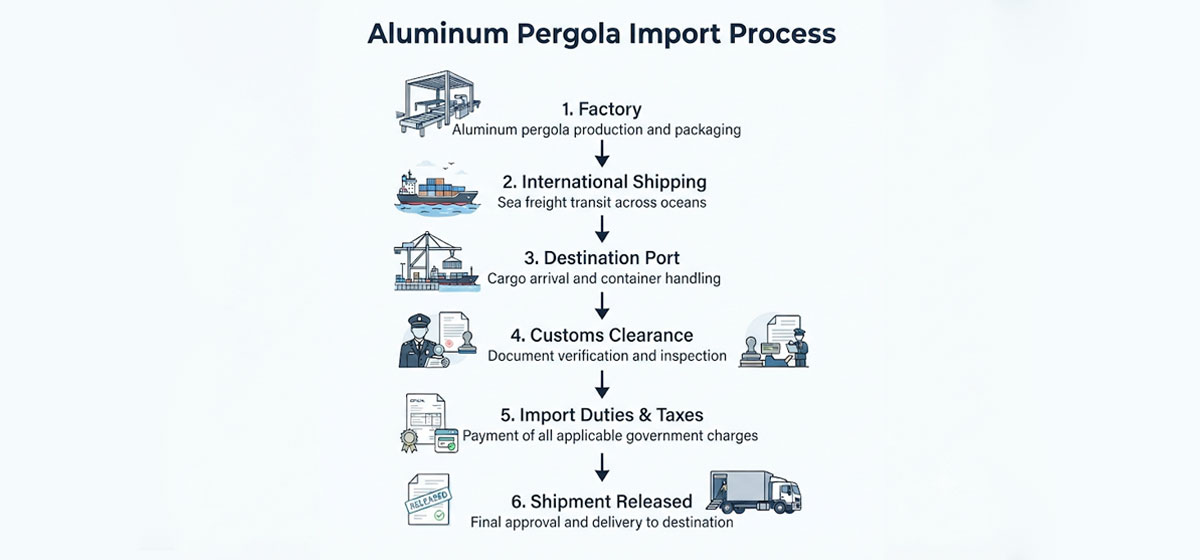
When importing an aluminum pergola, customs duties and taxes are important factors that can affect your final landed cost. Unlike product prices and shipping costs, these charges are mainly determined by the import regulations of your destination country.
The actual amount may vary depending on factors such as the product classification, import country, HS Code, and local tax policies.
Customs Duties
Customs duties are fees charged by the destination country when imported products enter the market. The duty rate for aluminum pergolas depends on the product classification and the customs regulations of each country.
Since duty rates vary between countries, you should confirm the applicable requirements before placing an order.
Import Taxes
Some countries may also apply additional import taxes, such as VAT or GST. These taxes are usually calculated based on the product value, shipping cost, and local regulations.
Checking Import Costs Before Ordering
Before importing an aluminum pergola, you should have a basic understanding of possible duties and taxes to better estimate your total landed cost.
Your supplier can provide product details and export documents to support the import process, but the final duties and taxes are determined by the customs authority of your destination country.
Customs Clearance and Local Charges: Costs After Your Pergola Arrives at the Port
After your aluminum pergola arrives at the destination port, there are still several steps before the products can be delivered to your project location. During this stage, additional charges related to customs clearance and local handling may occur.
These costs are separate from import duties and taxes, and they mainly depend on the destination country, port requirements, and local service providers.
Customs Clearance Fees
Customs clearance involves preparing documents, submitting import declarations, and completing the procedures required by local customs authorities.
Depending on your location and import arrangement, you may need to pay fees for:
l Customs broker services
l Documentation processing
l Import declaration
Port and Handling Charges
After arrival at the port, additional local charges may include:
l Terminal handling fees
l Port service fees
l Container handling charges
l Storage fees (if applicable)
These costs can vary depending on the port and how quickly the shipment is processed.
Local Delivery Costs
Once the shipment is cleared, the pergola needs to be transported from the port to your warehouse, project site, or final destination.
The local delivery cost may depend on:
l Delivery distance
l Truck requirements
l Site conditions
Understanding these potential charges in advance helps you prepare a more accurate budget for your entire import project.
Hidden Costs Buyers Often Overlook When Importing an Aluminum Pergola
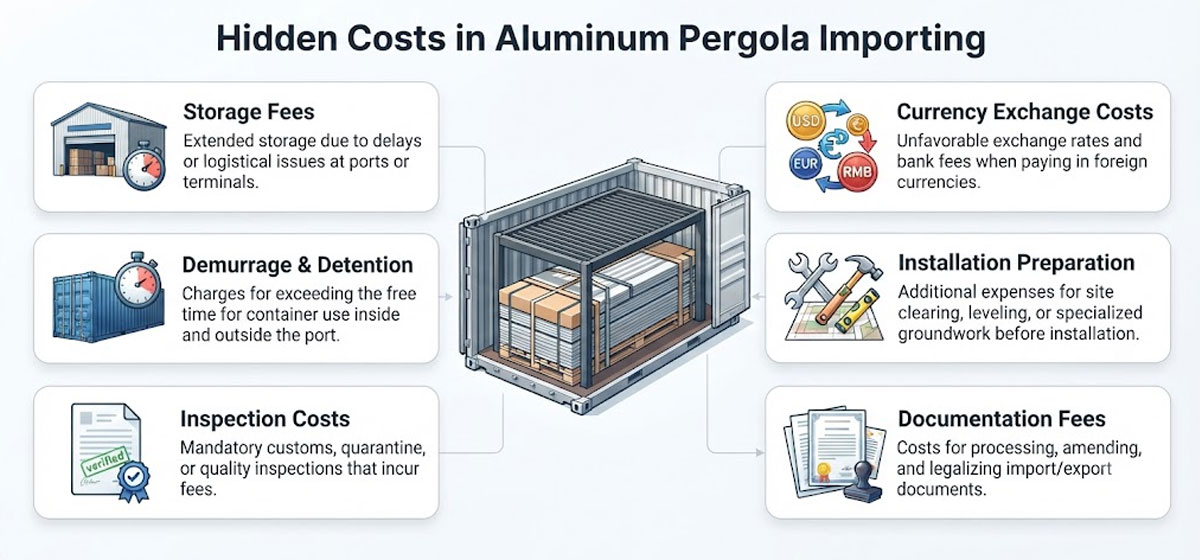
Throughout the import process, some costs may not appear in the initial quotation but can occur at different stages before the pergola reaches its final destination. These costs are usually related to shipment timing, local requirements, or project preparation.
Storage Fees
If the shipment cannot be cleared or collected within the required timeframe after arriving at the port, storage fees may apply. The longer the cargo remains at the facility, the higher the additional cost may become.
Demurrage and Detention Charges
Container usage is usually subject to a limited free period. If the container stays at the port or is not returned within the allowed time, additional demurrage or detention charges may occur.
Proper shipment planning and timely customs clearance can help reduce the possibility of these extra charges.
Inspection and Documentation Costs
Depending on the import requirements of your destination country, additional inspections or specific documentation may be required. These procedures can add extra time and administrative costs to the import process.
Installation and Site Preparation Costs
Although installation is not always included in the import cost, it is an important part of the overall pergola project budget. Site preparation, electrical connections, drainage systems, and installation conditions may require additional work before the pergola can be fully installed.
Currency Exchange and Payment Costs
For international purchases, exchange rate changes and payment-related fees may also affect the final amount you pay, especially for larger orders.
Considering these possible costs during the planning stage allows you to build a more complete budget for your aluminum pergola project.
Tips to Reduce Your Import Costs When Buying an Aluminum Pergola
After understanding the different components that make up the total import cost, the next step is finding practical ways to optimize your overall investment. Reducing costs does not always mean choosing the lowest-priced product, but rather making better decisions throughout the purchasing and import process.
Choose the Right Pergola Design and Configuration
A customized pergola with additional features can improve functionality, but every design adjustment and extra option may increase the total cost.
Before placing an order, you should clearly define your project requirements and choose the features that provide real value for your application.
Optimize Packaging and Shipment Planning
Since aluminum pergolas are large-volume products, packaging design and container loading efficiency have a direct impact on shipping costs.
Working with an experienced supplier can help you optimize the loading plan, improve container space utilization, and reduce the average transportation cost per unit.
Compare Total Landed Cost Instead of Product Price
A lower product quotation does not always mean a lower final investment. When comparing suppliers, you should consider the complete cost structure, including product specifications, shipping arrangements, taxes, and other import-related expenses.
Evaluating the total landed cost gives you a clearer understanding of the actual value of each quotation.
Plan Your Order in Advance
International shipping costs, production schedules, and customs procedures all require time to arrange. Planning your order early allows you to avoid unnecessary rush costs and better manage the entire import process.
A well-planned purchasing strategy can help you control costs while ensuring product quality and delivery reliability.
How BLD Pergola Supports International Buyers
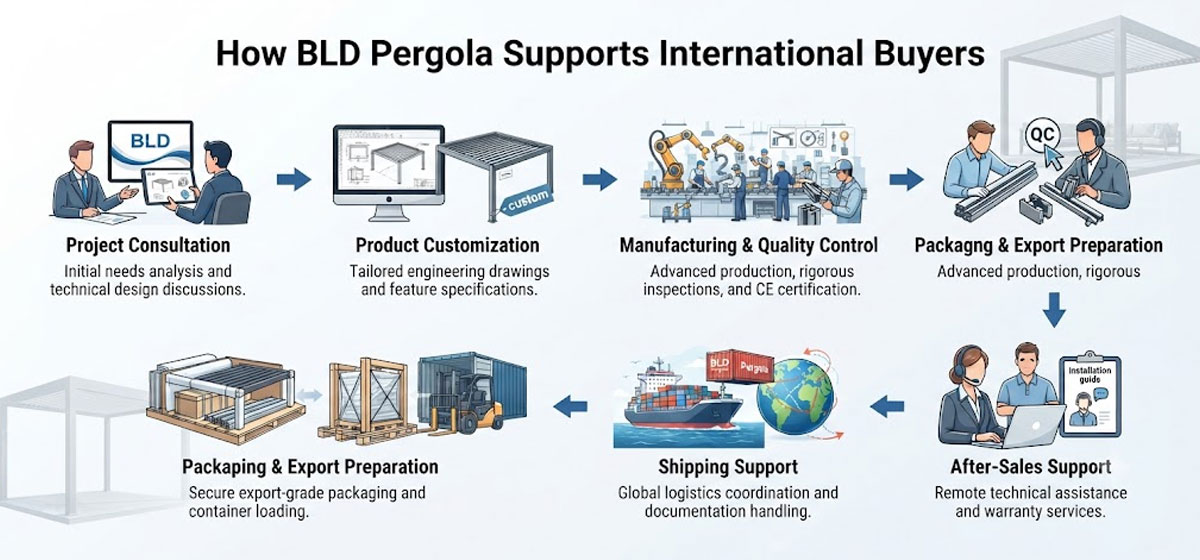
Importing an aluminum pergola involves more than choosing a product. From quotation confirmation and production to shipping arrangements and final delivery, every step can affect your total project cost.
At BLD Pergola, we understand the challenges international buyers face during the import process. Our goal is to provide clear product information, reliable communication, and practical support throughout the purchasing process.
Clear and Detailed Quotations
A complete quotation helps you understand what is included and makes it easier to evaluate the total investment.
We provide detailed product specifications and quotation information based on your project requirements, helping you better understand the cost structure before placing an order.
Support with Shipping Arrangements
Because pergolas are large-volume products, transportation planning plays an important role in controlling overall costs.
BLD Pergola can assist with shipment planning, packaging arrangements, and logistics coordination to help ensure a smoother delivery process.
Product Documentation and Import Support
International buyers may need different documents during the import process depending on their destination country.
We can provide the necessary product information and export documents to support your import preparation and communication with local partners.
Focus on Long-Term Cooperation
For international projects, a reliable supplier is not only responsible for manufacturing the product but also supporting the entire purchasing process.
By combining manufacturing experience with export experience, BLD Pergola aims to make aluminum pergola sourcing easier, clearer, and more efficient for buyers worldwide.
Frequently Asked Questions About Importing an Aluminum Pergola
1. What information should I provide when requesting a pergola quotation?
You should provide the pergola size, installation location, design requirements, color options, and any additional features you need. This helps us prepare a more accurate quotation.
2. Can I customize the size and design of an aluminum pergola?
Yes. BLD Pergola offers customization for size, color, design, and optional features to meet different project requirements.
3. How long does it take to manufacture an aluminum pergola?
The standard production lead time is 30–35 working days, depending on the order quantity and customization requirements.
4. Can an aluminum pergola withstand different climate conditions?
Yes. BLD heavy-duty aluminum pergolas are designed to withstand various weather conditions, with excellent wind and snow resistance.
5. Do I need professional installation?
You can install the pergola yourself using our installation manual and online technical support. For larger or more complex projects, professional installation is recommended.
6. Can I order a sample before placing a bulk order?
Yes. BLD Pergola offers a 1 m × 1 m scale model that reflects the same design and workmanship as the full-size pergola. Material samples are also available upon request.
7. What's the best Incoterm for importing an aluminum pergola?
It depends on your importing experience. FOB is suitable if you have your own freight forwarder, while DDP is often more convenient for first-time importers because most logistics and customs procedures are handled by the supplier.
Ready to Get a Pergola Quote?
Every pergola project is unique, and the total import cost depends on factors such as the product specifications, shipping destination, and trade terms.
If you're planning to import an aluminum pergola, BLD Pergola can provide a detailed quotation based on your project requirements, along with professional support for shipping and export documentation.
Contact us today to discuss your project and receive a customized quotation.