

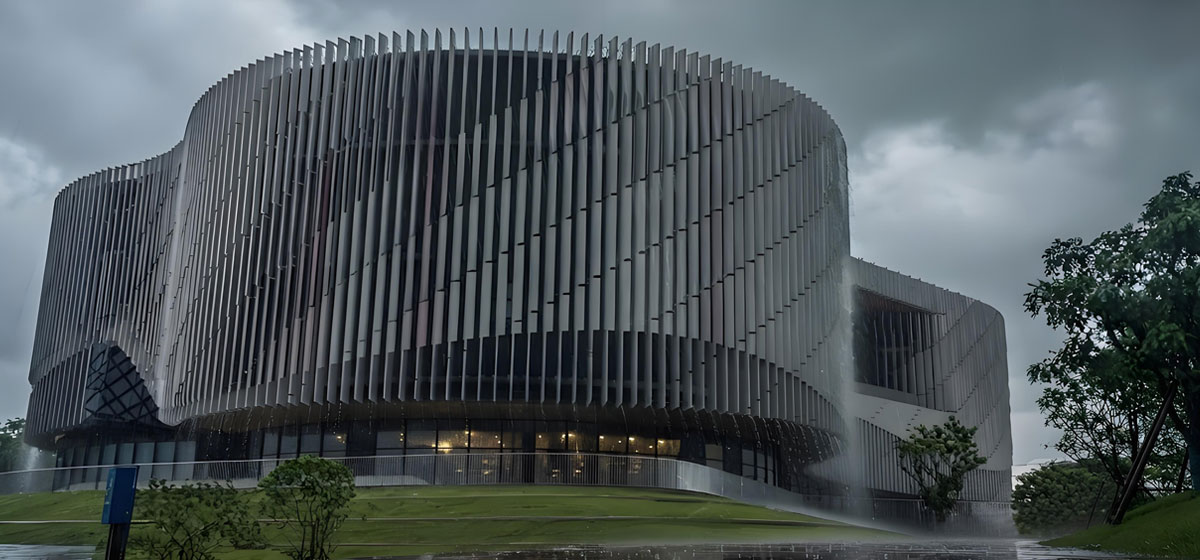
If you are considering aluminum louvers for an exterior wall, HVAC opening, or ventilation system, you may be wondering: are aluminum louvers waterproof?
Not exactly. Aluminum louvers are designed to allow air to pass through, so they are not a completely watertight barrier. However, a well-designed louver can do a very good job of keeping rain out while maintaining the airflow a building needs.
The level of rain protection depends on several factors, including the blade design, louver depth, drainage, airflow, and installation. For projects exposed to heavy rain or strong winds, the louver's tested water-penetration performance is also important.
How Do Aluminum Louvers Protect Against Rain?
The aluminum itself is not what keeps rain out. It is mainly the way the louver is designed.
Sloped Blades
The blades of an exterior louver are typically angled to prevent rain from traveling straight through the opening. When water hits the blades, the angle helps direct it back toward the outside.
Blade angle and shape can make a noticeable difference, especially when the louver is installed in an exposed location.
Drainable Louver Design
Some louvers are designed with drainage in mind. If water reaches the inside of the blade assembly, the louver provides a path for that water to collect and drain back outside.
This is useful for applications such as outdoor air intakes, where keeping rainwater away from the interior of the building is particularly important.
Blade Profile, Spacing, and Depth
The profile and spacing of the blades also affect how well a louver handles rain.
A deeper louver gives water a longer path to travel before it could reach the inside of the opening. Blade spacing and profile determine how rain is deflected and how easily water can drain away.
There is a trade-off, though. A louver also has to move air efficiently. Changes to blade spacing or depth can affect free area, face velocity, and pressure drop, so rain protection cannot be considered separately from airflow requirements.
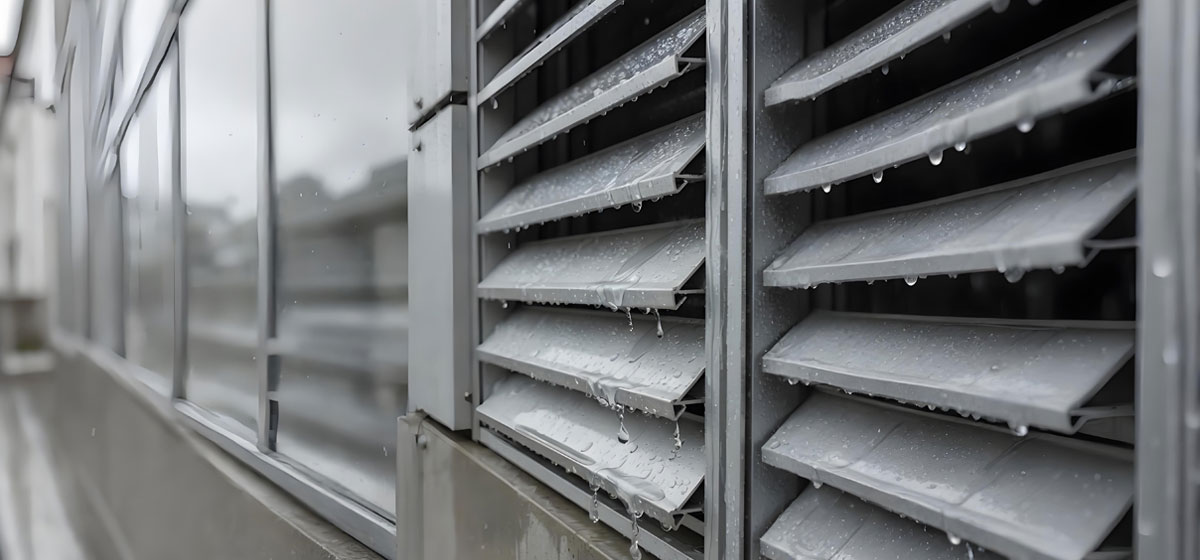
When Can Rain Penetrate an Aluminum Louver?
Even a well-designed louver cannot be expected to block every drop of water under every weather condition.
Water penetration is more likely when the louver is exposed to:
· Heavy or prolonged rainfall
· Strong winds
· Wind-driven rain
· High face velocity or airflow
· A louver that is not suited to the application
· Poor installation or inadequate drainage
Wind-driven rain deserves particular attention. During a storm, wind can push rain horizontally into a louver instead of allowing it to fall vertically.
The amount of water that reaches the opening can therefore be very different from what would happen during normal rainfall.
For buildings in areas with severe weather, it is better to look at actual water-penetration or wind-driven-rain test data rather than rely on a product simply being described as "waterproof."
Standard Louvers vs. Rain-Resistant Louvers
Not every aluminum louver is designed to handle the same amount of rain.
Feature | Standard Louvers | Rain-Resistant / Drainable Louvers |
Normal rain | Basic protection | Improved protection |
Heavy rain | More susceptible to water penetration | Better resistance |
Water drainage | Limited | Designed for improved drainage |
Wind-driven rain | Limited protection | Better performance |
Typical applications | General ventilation | Exterior and weather-exposed applications |
For a building that regularly sees heavy rain or strong winds, a drainable or high-performance louver may be a better choice than a standard ventilation louver.
The right option still depends on the location, opening, airflow requirements, and level of weather exposure.
How Is Louver Water Resistance Tested?
When comparing louvers, it is useful to look beyond terms such as "waterproof" or "rainproof." Test data gives a much clearer picture of how a louver performs.
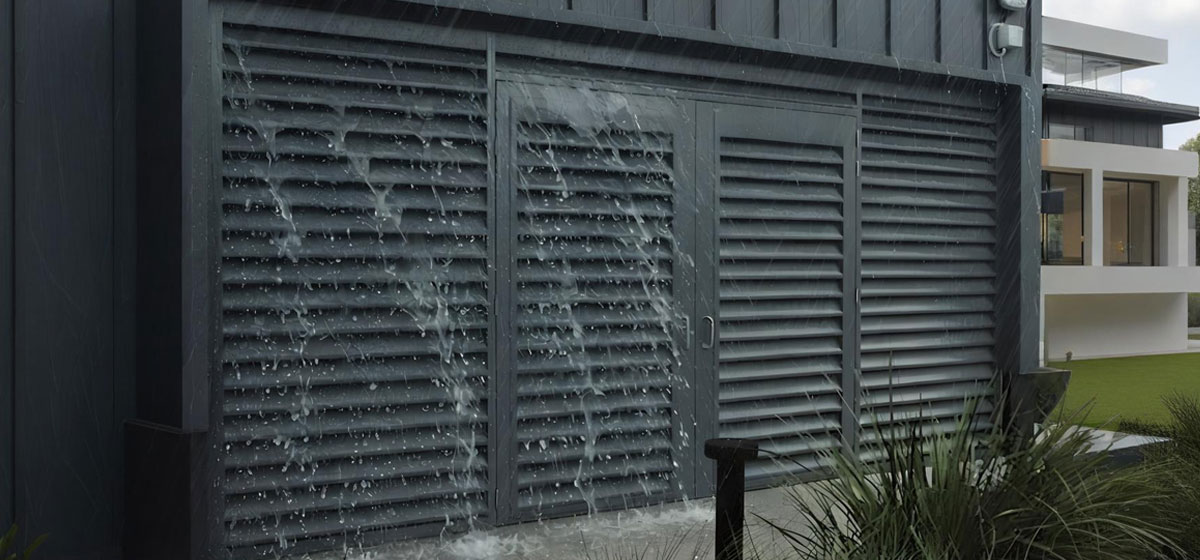
Water Penetration Testing
Water penetration testing evaluates how a louver performs when exposed to water under controlled conditions.
The test can show the airflow conditions at which water begins to penetrate the louver. This gives designers a way to compare different louver designs based on measurable performance.
Wind-Driven Rain Testing
Wind-driven rain testing is especially relevant to exterior louvers.
Real storms usually involve both wind and rain. Wind can force water toward the louver, making the conditions quite different from a simple rainfall test.
For buildings that are highly exposed to storms, wind-driven-rain performance can be an important part of louver selection.
Understanding AMCA 500-L
AMCA 500-L provides standardized laboratory test methods for evaluating louver performance, including water penetration and wind-driven rain.
When a louver is being considered for a weather-exposed application, reviewing the relevant test results can help architects, engineers, and contractors make a more informed decision.
It is worth keeping in mind that test results apply to the conditions under which the louver was tested. They should not be taken to mean that a louver will be completely waterproof in every combination of wind, rain, airflow, and installation condition.
Does Installation Affect Louver Water Resistance?
Yes. The louver is only one part of the opening.
A well-designed louver can still have water-intrusion problems if the surrounding wall opening is not properly detailed or installed.
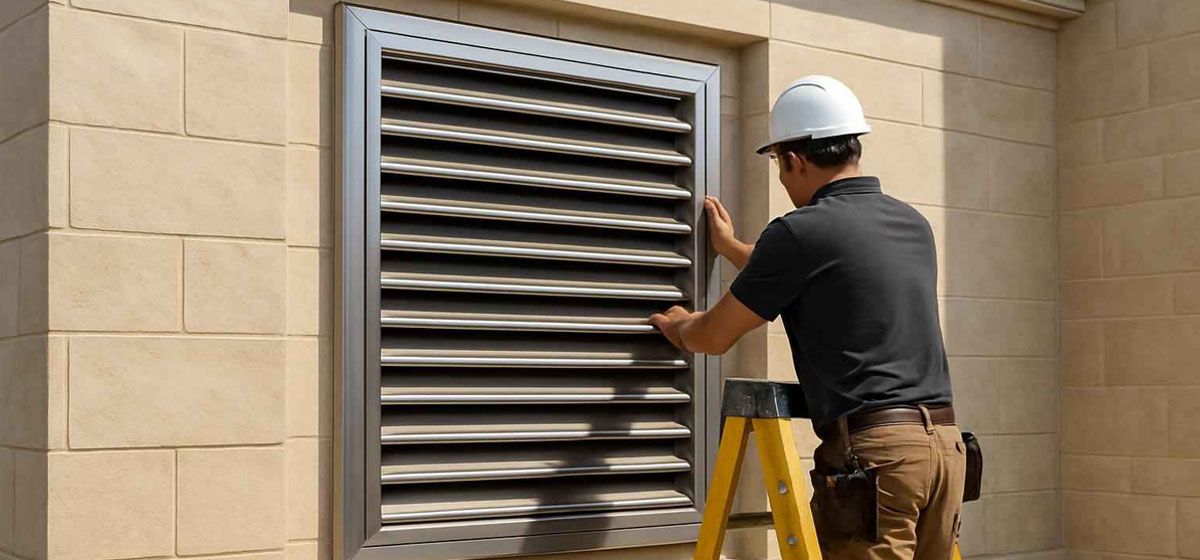
Flashing
Proper flashing helps keep water from getting around the outside of the louver frame and into the wall or building interior.
Sloped Sill
A properly sloped sill gives water a clear path to drain toward the exterior instead of allowing it to collect beneath the louver.
Drainage
The louver and the surrounding wall assembly should work together to provide a way for any collected water to drain outside.
Frame Sealing
Sealing around the louver frame helps close gaps between the louver and the surrounding wall construction.
In practice, rain resistance is a system issue, not just a louver issue. The louver, wall opening, flashing, sill, drainage, and installation all have a role to play.
How to Choose an Aluminum Louver for Rainy Conditions
If the louver will be installed in an area that receives significant rainfall, consider the following before making a selection:
1. Look at the local weather conditions.
Consider rainfall, wind speed, and whether the louver will be directly exposed to prevailing wind and rain.
2. Choose a louver design suited to the application.
Standard, drainable, and wind-driven-rain-resistant designs offer different levels of protection.
3. Check water-penetration test data.
Actual performance data is more useful than relying on the word "waterproof."
4. Consider wind-driven rain.
This is especially relevant for coastal areas, high-rise buildings, storm-prone regions, and exposed exterior openings.
5. Do not overlook airflow.
The louver still needs to provide the required airflow without creating excessive pressure drop. Free area and face velocity should be considered alongside rain protection.
6. Plan the installation as part of the design.
Flashing, sill slope, drainage, and sealing can all affect the final performance of the louver opening.
Why Choose BLD Aluminum Louvers?
An exterior louver has to do more than provide ventilation. It also needs to handle the conditions it will be exposed to throughout its service life.
BLD provides aluminum louver solutions for a range of architectural and ventilation applications. Depending on project requirements, louver dimensions, blade configurations, finishes, and other details can be customized to suit the application.
For projects where rain and weather exposure are important considerations, louver selection should take into account the required airflow, environmental conditions, and installation details.
Looking for aluminum louvers for a rain-exposed project? Contact BLD to discuss your project requirements and find a suitable solution.
Frequently Asked Questions
Do aluminum louvers let rain in?
They can under certain conditions. Heavy rain, strong winds, wind-driven rain, airflow velocity, louver design, and installation can all affect water penetration.
What type of louver is best for heavy rain?
Drainable or high-performance louvers designed and tested for water penetration or wind-driven rain are generally better suited to areas with heavy rainfall.
What is a drainable louver?
A drainable louver is designed to collect and direct water toward drainage paths, helping reduce the amount of water that reaches the inside of the building.
What is a wind-driven rain louver?
A wind-driven rain louver is designed to reduce water penetration when wind pushes rain toward the louver. It is particularly useful for exposed exterior openings.
How can I prevent water from entering through a louver?
Start by choosing a louver that matches the expected rain and wind conditions. Check its water-penetration or wind-driven-rain performance, and make sure the surrounding opening has proper flashing, drainage, sill design, and sealing.