

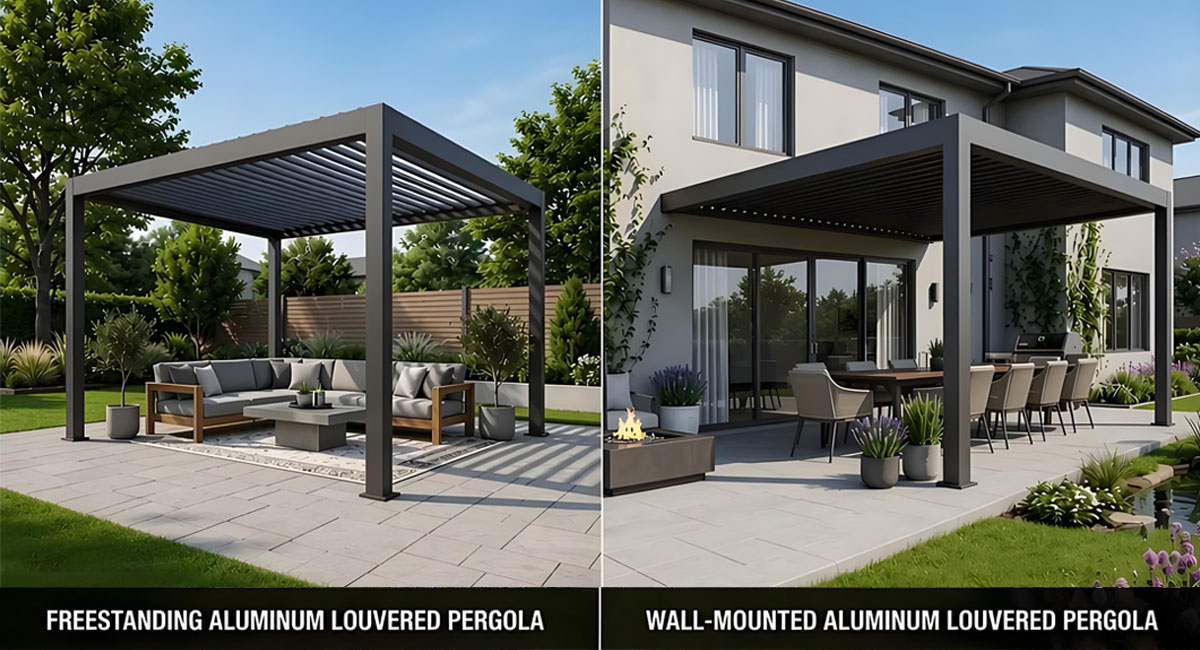
When planning an outdoor living area, choosing between a freestanding pergola and a wall-mounted pergola is an important decision. Both options provide shade, improve outdoor comfort, and enhance the overall appearance of your backyard. However, they differ in installation methods, layout flexibility, and how they connect to your home.
A freestanding pergola offers more flexibility in placement, while a wall-mounted pergola creates a more natural connection between indoor and outdoor living spaces. Understanding the features of each option can help you choose the right solution based on your property, budget, and specific needs.
What Is a Freestanding Pergola?
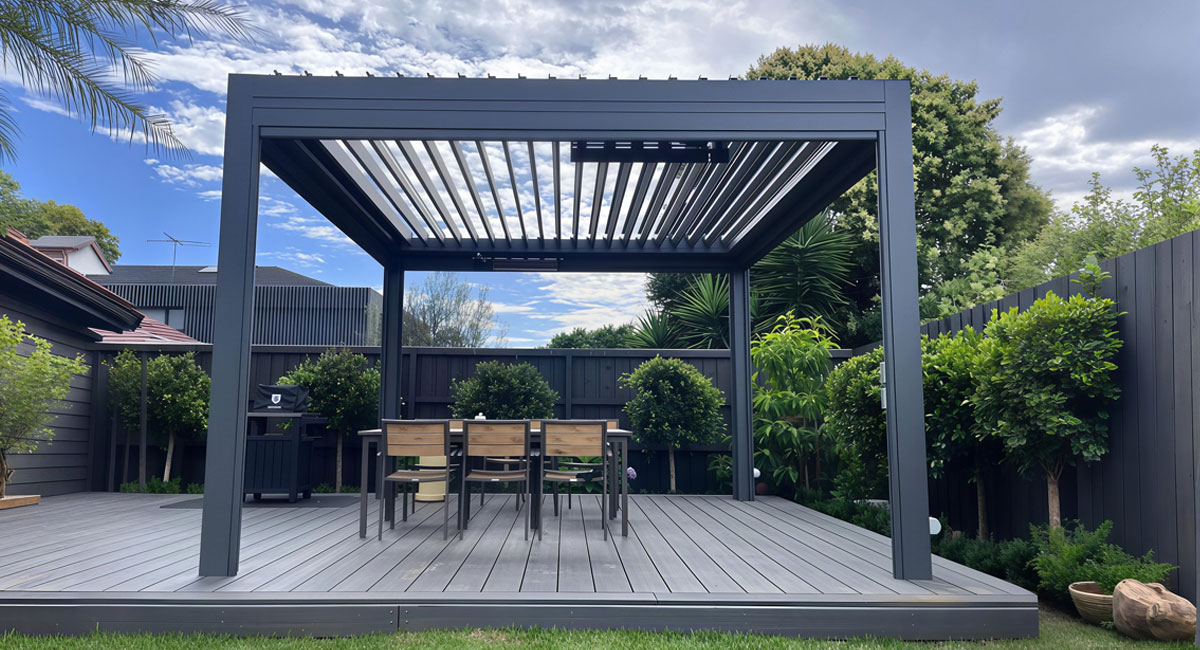
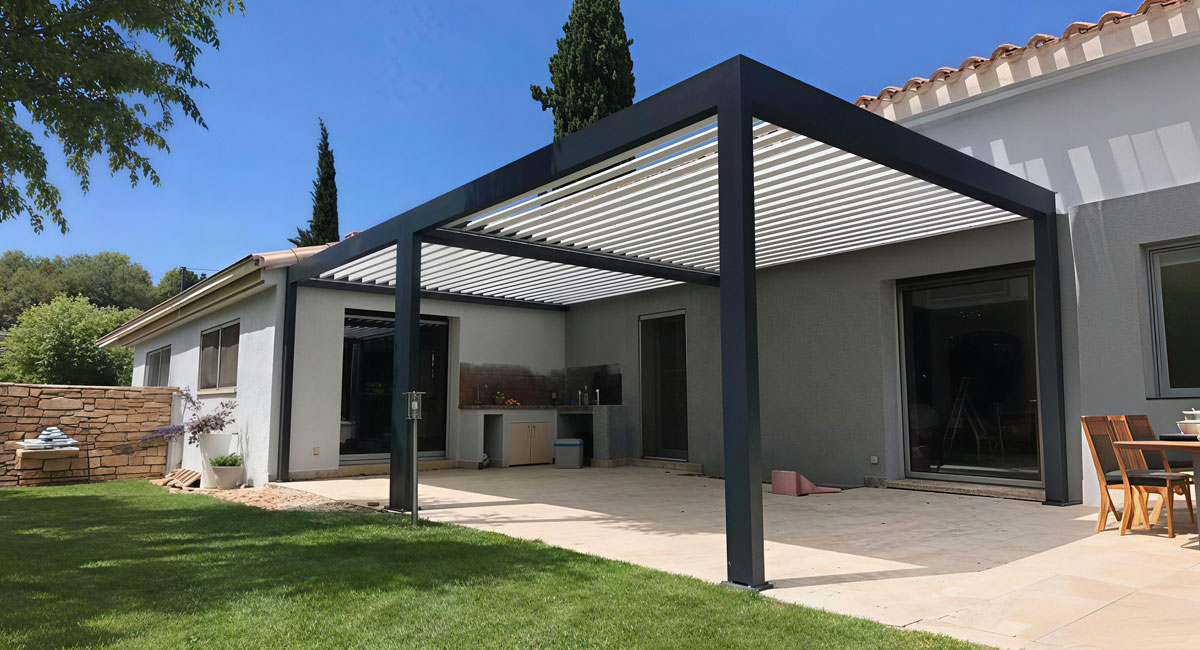
A freestanding pergola is an independent structure supported by its own posts and foundation system. Unlike a wall-mounted pergola, it does not rely on a connection to the house for its primary support, making it suitable for a variety of outdoor settings.
Pros and Cons of a Freestanding Pergola
One of the biggest advantages of a freestanding pergola is its flexible placement. You can position it based on your backyard's dimensions, furniture layout, and intended use to create a dedicated outdoor living area.
Because a freestanding pergola does not depend on an exterior wall, it also provides more options when planning the layout of your outdoor space.
However, a freestanding pergola requires a suitable support and anchoring system that meets the structural requirements of the design. Post placement may affect the usable ground space, while site conditions, foundation work, and installation requirements can influence the complexity and overall cost of the project.
Where Does a Freestanding Pergola Work Best?
This design is particularly well suited to projects that call for a dedicated outdoor area, such as:
l Creating a designated seating or dining area in an open backyard.
l Adding shade beside a swimming pool or in a garden.
l Installing a pergola away from the house.
l Dividing an outdoor space into separate functional areas.
What Is a Wall-Mounted Pergola?
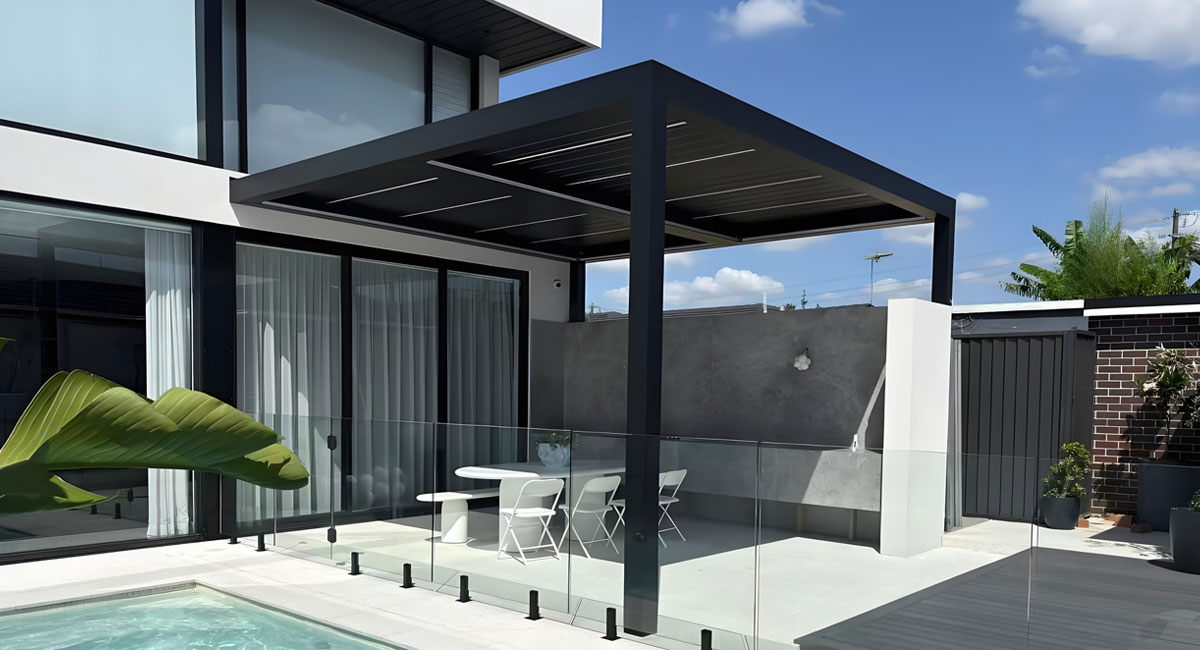
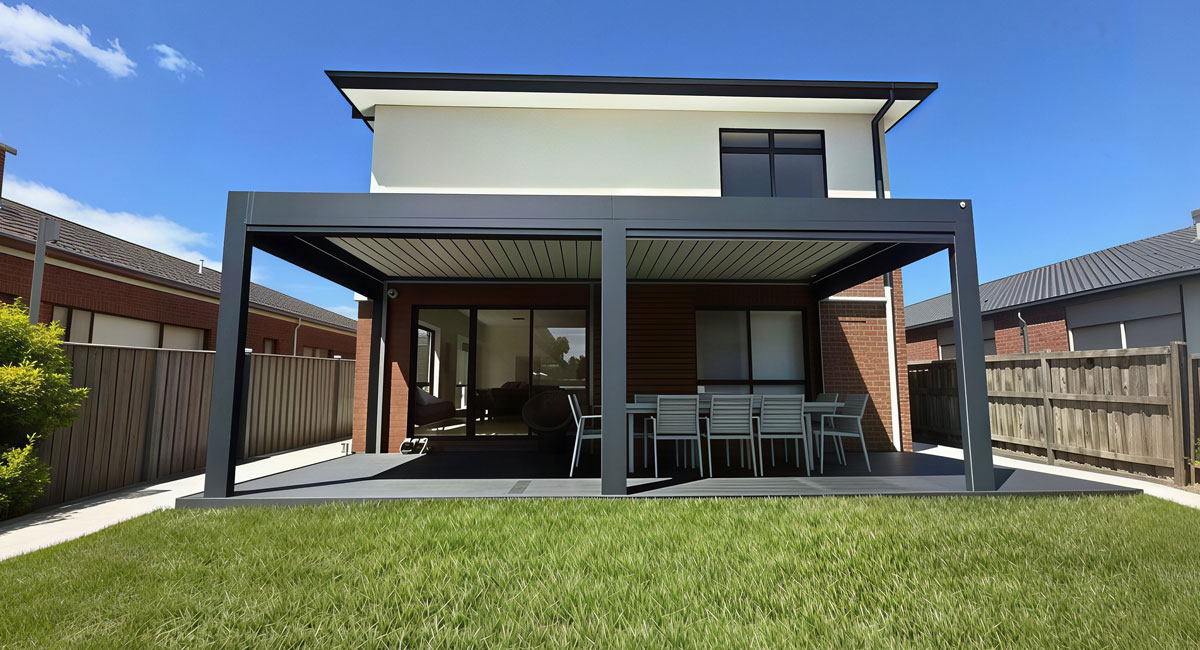
A wall-mounted pergola, also known as an attached pergola, is connected to an exterior wall or building structure that meets the installation requirements. It typically attaches to the building on one side, with the remaining structure supported by the appropriate support system.
This design integrates the pergola with the house, creating a more natural transition between indoor and outdoor spaces while providing practical shade for an adjacent patio.
Pros and Cons of a Wall-Mounted Pergola
One of the main advantages of a wall-mounted pergola is its ability to complement the existing architecture. Depending on the structural design, it may also reduce the need for independent posts along the side attached to the building, leaving more room for furniture and everyday movement.
However, this installation method has specific structural requirements. The wall and attachment points must be capable of supporting the required loads, and the installation must account for waterproofing, drainage, and connection details.
Not every exterior wall is suitable for a wall-mounted pergola. Before choosing this option, make sure the building structure meets the product's installation requirements. A professional assessment may be necessary.
Where Does a Wall-Mounted Pergola Work Best?
A wall-mounted pergola is generally well suited to projects such as:
l Extending indoor living space onto a patio or terrace.
l Creating a shaded area directly beside the house.
l Connecting an outdoor dining area with the indoor kitchen.
l Making better use of outdoor space along an exterior wall.
For homes with a suitable attachment point and an adjacent patio, a wall-mounted pergola can provide a practical solution that complements the existing architecture.
Freestanding vs. Wall-Mounted Pergola: Key Differences
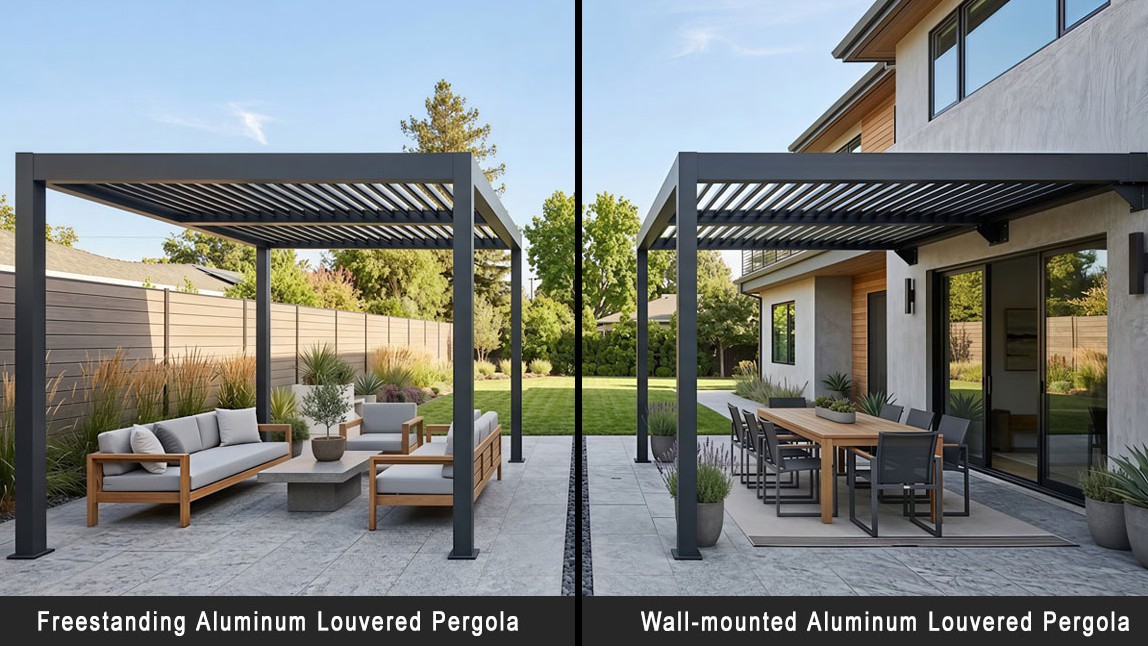
The main differences between these two pergola types lie in their support structures and installation methods. These differences can also affect site planning, construction requirements, and overall project costs.
Comparison Factor | Freestanding Pergola | Wall-Mounted Pergola |
Support Structure | Independent posts and a suitable foundation system | Connected to the building structure, with the required supporting system |
Layout Flexibility | Generally offers more freedom in placement | Limited by the building's location and attachment conditions |
Space Planning | Requires room for posts around the structure | May reduce the need for posts along the attached side |
Design | Creates a standalone outdoor focal point | Integrates naturally with the home's architecture |
Installation Requirements | Ground conditions, foundations, and anchoring | Wall structure, connection details, waterproofing, and anchoring |
Cost Factors | Foundation work, posts, and labor | Wall conditions, connection methods, and installation complexity |
Which Pergola Is More Cost-Effective?
Neither type of pergola is always less expensive than the other. The total cost depends on the pergola's size, materials, structural design, site conditions, and installation requirements.
A freestanding pergola may require additional foundation work or posts, while a wall-mounted pergola may involve structural assessments, specialized mounting hardware, and waterproofing.
Therefore, the installation type alone is not enough to determine which option is more cost-effective.
BLD Pergola can provide product information and project consultation based on your specific needs. If you're comparing the two installation options, consider providing your site dimensions, intended installation location, and relevant site details. This information can help determine a suitable solution and estimate the project cost.
Freestanding vs. Wall-Mounted Pergola: How to Choose
Once you understand the main differences between the two pergola types, consider the following three factors to determine which design best fits your project.
1. Consider Your Existing Layout
Start by identifying where you plan to install the pergola and whether there is enough room for posts, furniture, and everyday movement.
If the area is relatively open, you have more flexibility in positioning the pergola based on how you plan to use the space. If the installation area is next to the house, consider the wall attachment requirements and how the pergola will complement the existing architecture.
2. Evaluate Installation Requirements
Installation conditions are an important factor when choosing a pergola.
For a freestanding pergola, make sure the ground conditions, foundation type, and anchoring method meet the structural requirements. For a wall-mounted pergola, confirm that the building structure can accommodate the connection and that waterproofing and drainage are properly addressed.
If there is any uncertainty about the site conditions, consider a professional assessment before finalizing the product and installation method.
3. Compare Total Project Costs
In addition to the product price, consider foundation work, installation labor, mounting hardware, and any modifications required at the site.
Request a complete quote based on your actual site conditions and compare the total project costs rather than looking at product prices alone.
Ultimately, your decision should be based on a combination of layout, installation feasibility, and overall budget.
Frequently Asked Questions
1. Is a Freestanding Pergola Better Than a Wall-Mounted Pergola?
Both options have their advantages. A freestanding pergola generally offers more flexibility in placement, while a wall-mounted pergola creates a closer connection to the building. The right choice depends on your site conditions and layout requirements.
2. Is a Wall-Mounted Pergola Less Expensive to Install?
Not necessarily. Although a wall-mounted design may reduce the need for independent posts along the attached side, the total installation cost still depends on wall conditions, connection methods, foundation work, and labor. Getting a quote based on your specific site is the best way to compare the two options.
3. Can a Wall-Mounted Pergola Be Installed on Any Exterior Wall?
No. The wall and its supporting structure must meet the applicable load and connection requirements. Waterproofing, drainage, and local building codes must also be considered. Before installation, confirm that the site is suitable. If needed, consult a qualified professional or contact BLD Pergola for product installation guidance.
4. Which Pergola Is Better for a Small Patio?
For a small patio, prioritize usable space, furniture placement, clearance, and post locations. If the patio is next to an exterior wall that meets the installation requirements, a wall-mounted pergola may help optimize the layout. However, alternative options should be considered if the wall is not suitable for attachment.
Conclusion
Freestanding and wall-mounted pergolas each offer distinct advantages. Their main differences lie in support structures, installation requirements, and how they fit into an outdoor space. When choosing between them, consider your site conditions, building structure, and overall budget rather than making a decision based on appearance or installation type alone.
BLD Pergola offers customizable aluminum pergola solutions and can help assess suitable options based on different project layouts and installation requirements.
Explore our aluminum pergola collection or contact BLD Pergola to discuss pergola designs and request a quote for your project.